

While sci-fi authors spent decades imagining flying cars zooming over futuristic highways, residents across the Dallas suburbs are simply stepping into their backyards in slippers to pick up a piping-hot burrito or a box of Band-Aids from the grass. No delivery drivers, no awkward small talk, and no sitting in bumper-to-bumper gridlock on the I-635 interchange.
Texas—a state historically powered by roaring V8 engines, oil derricks, and heavy-duty pickup trucks—has unexpectedly emerged as the world’s ground zero for the quiet hum of electric delivery drones. Across the Dallas–Fort Worth metroplex, the phrase “dropped from the sky” has lost all dramatic flair, turning into just another routine status update on a package tracking app. Explore the full story behind this North Texas trend on dallas-name.com.
The Texas Landscape: A Natural Runway for Single-Story America
The question of why Dallas became the epicenter of the global drone revolution comes down to one surprisingly simple geographic factor: suburbia.
Sprawling Dallas suburbs like Frisco, Grapevine, Plano, and North Richland Hills form a vast, neatly plotted grid of single-story neighborhoods. Residential streets stretch all the way to the horizon, turning conventional “last-mile” logistics into an operational headache. To drop off a single bottle of pain relievers or a box of chicken tenders, a delivery van often spends more time winding through identical cul-de-sacs than the restaurant kitchen spent making the food.
For commercial drones, however, this environment is an absolute paradise.
- Backyard landing zones the size of mini-stadiums. Instead of weaving between high-rise balconies, external AC units, and overhead utility lines in a dense downtown core, a typical suburban DFW home offers a generous patch of open lawn. Backyards here have plenty of clearance, allowing drones to hover safely above tree lines and winch down packages onto manicured turf without endangering fences or property.
- Clear horizons with zero optical blind spots. Low-density developments are an autonomous navigation engineer’s dream. With no glass “urban canyons” to disrupt GPS and GNSS reception, there are fewer sudden wind drafts and minimal obstacles in the way of onboard lidars, ultrasonic sensors, and computer vision cameras.
- Pragmatic regulatory backing. The Federal Aviation Administration (FAA) took a rigorous yet sensible approach. If you are going to grant the country’s first broad permissions for commercial beyond-visual-line-of-sight (BVLOS) operations over populated areas, do it where avenues are as wide as football fields and overhead utility lines are far less hazardous.
Single-story Texas, with its enduring affinity for personal space and comfort, inadvertently built the ultimate real-world test track for cutting-edge flight technology. What once looked like inefficient suburban sprawl has turned out to be an unbeatable logistics asset.
Skyward Rush: Who Controls North Texas Airspace?
What sets the DFW metroplex apart is that it has brought together almost all the heavyweights of the global drone logistics sector. While most metropolitan areas around the world are still running isolated pilot programs or one-off PR stunts, operators in suburban Dallas are locked in a head-to-head commercial race for everyday consumers.
DFW’s Drone Heavyweights: The Engineering Rivalry
To win over suburban doorsteps, each key player has bet on its own proprietary hardware design and delivery strategy.
| Operator | Hardware & Strategy | Key Delivery Feature |
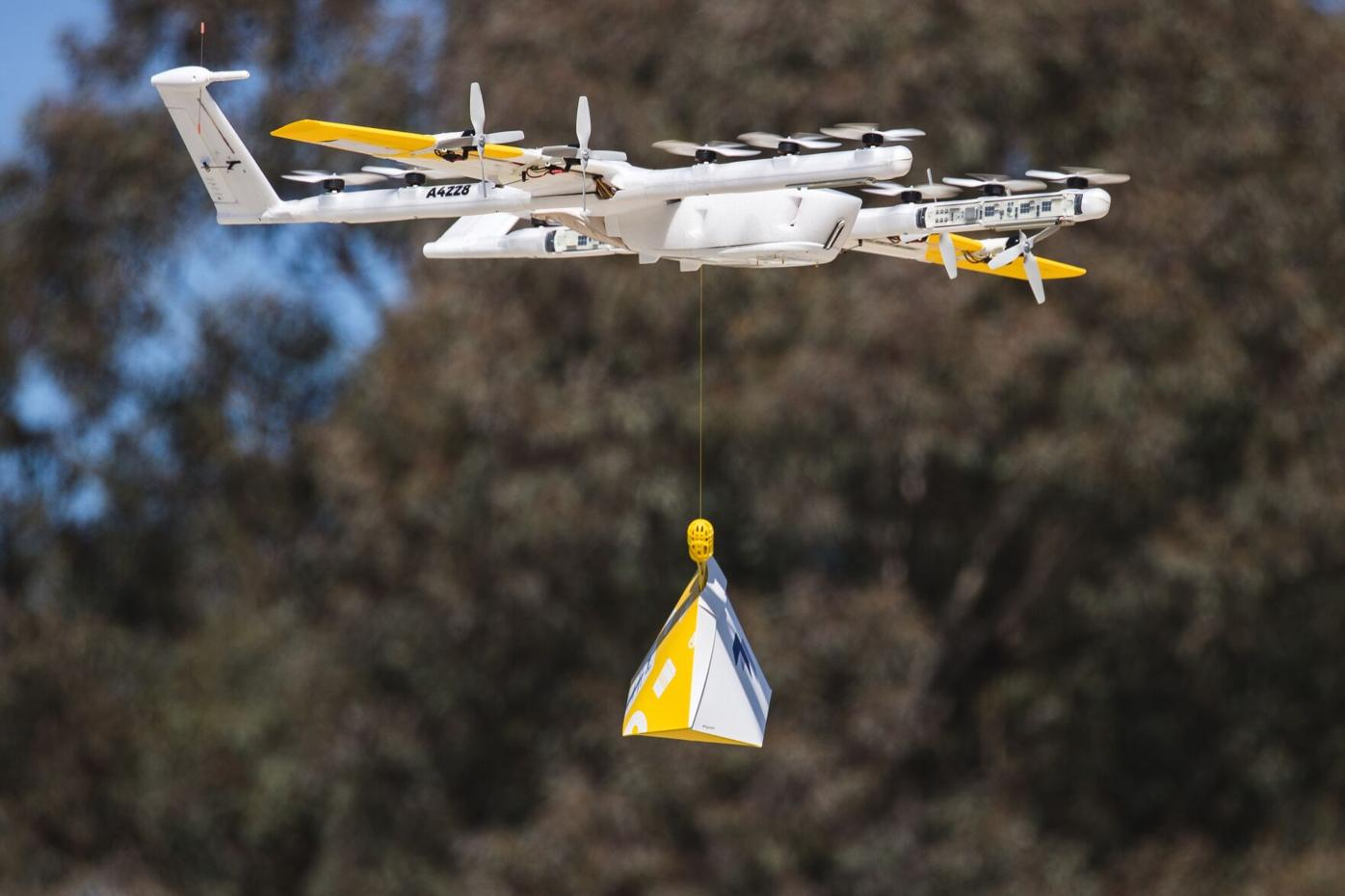
| Alphabet Wing (Google) | Hybrid fixed-wing VTOL aircraft engineered for swift horizontal transit. | Hovers at a safe altitude of roughly 23 feet, gently lowering packages via a high-strength tether. |
| Zipline | Next-generation Platform 2 autonomous aircraft with a dual-stage drop system. | Deploys a streamlined tethered droid (“Zip”) that glides silently down to deliver packages with pinpoint precision. |
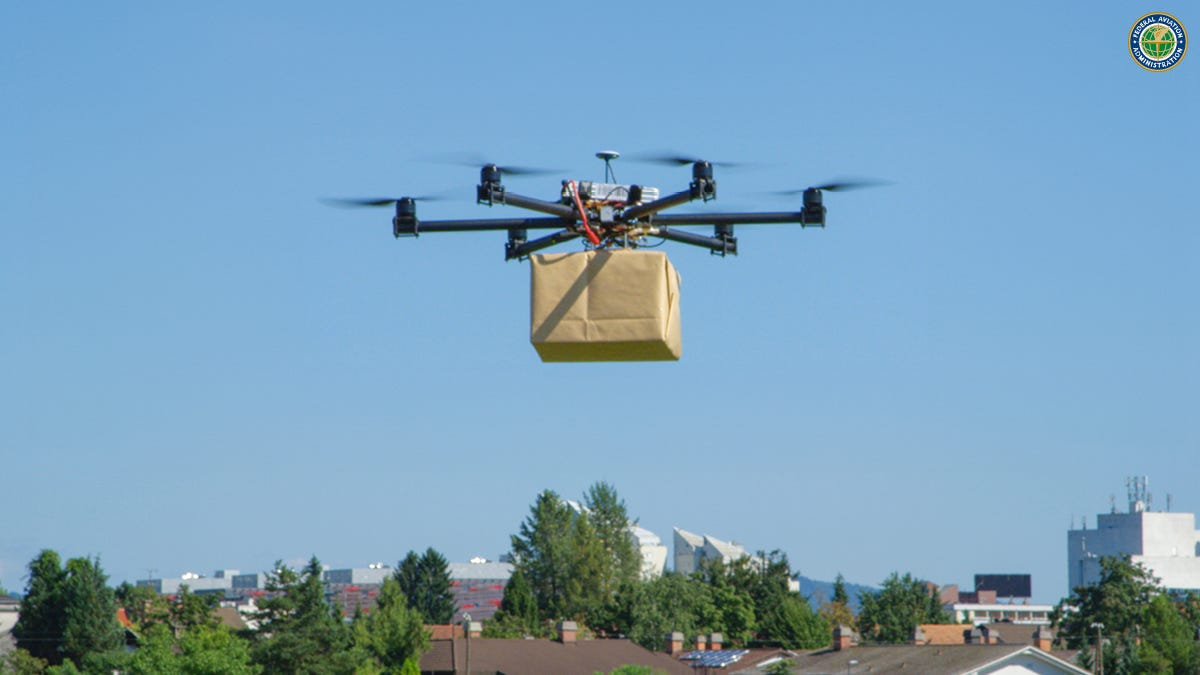
| Flytrex | Rugged, wind-resistant hexacopters engineered for high-frequency short-haul flights. | Specializes in rapid delivery of hot restaurant meals, fast food, and supermarket essentials. |
| Walmart | Retail powerhouse integrating Wing and Zipline networks straight into its fulfillment pipeline. | Provides aerial delivery coverage to over 75% of the population across the entire DFW metroplex. |
BVLOS: The Defining Technical and Regulatory Milestone
Yet the most significant breakthrough unfolding in North Texas skies goes far beyond rotor shapes or battery chemistry. Dallas became the first region where operators secured wide-scale FAA approval for BVLOS (Beyond Visual Line of Sight) flights.
Securing this status marked the definitive graduation of drone delivery from an experimental hobby into a full-scale industry.
- Eliminating ground spotters. Drones no longer rely on human observers stationed on rooftops or street corners to track every leg of the flight with binoculars.
- Autonomous flight guided by AI. Aircraft follow dynamic routing software. Equipped with onboard radars, lidars, and sense-and-avoid tech, drones track other airspace traffic—from private helicopters to flocks of birds—and recalculate paths in real time without human intervention.
This technical framework has turned Dallas skies into a coordinated transit network of the future, making drones every bit as normal and predictable as delivery trucks idling on the street.
Living with the Hum: How Drones Are Reshaping Daily Life
Suburban Dallas residents adjusted to their new flying couriers the way people usually adjust to disruptive technology: moving swiftly from early skepticism and neighborhood chatroom panic to complete daily reliance.
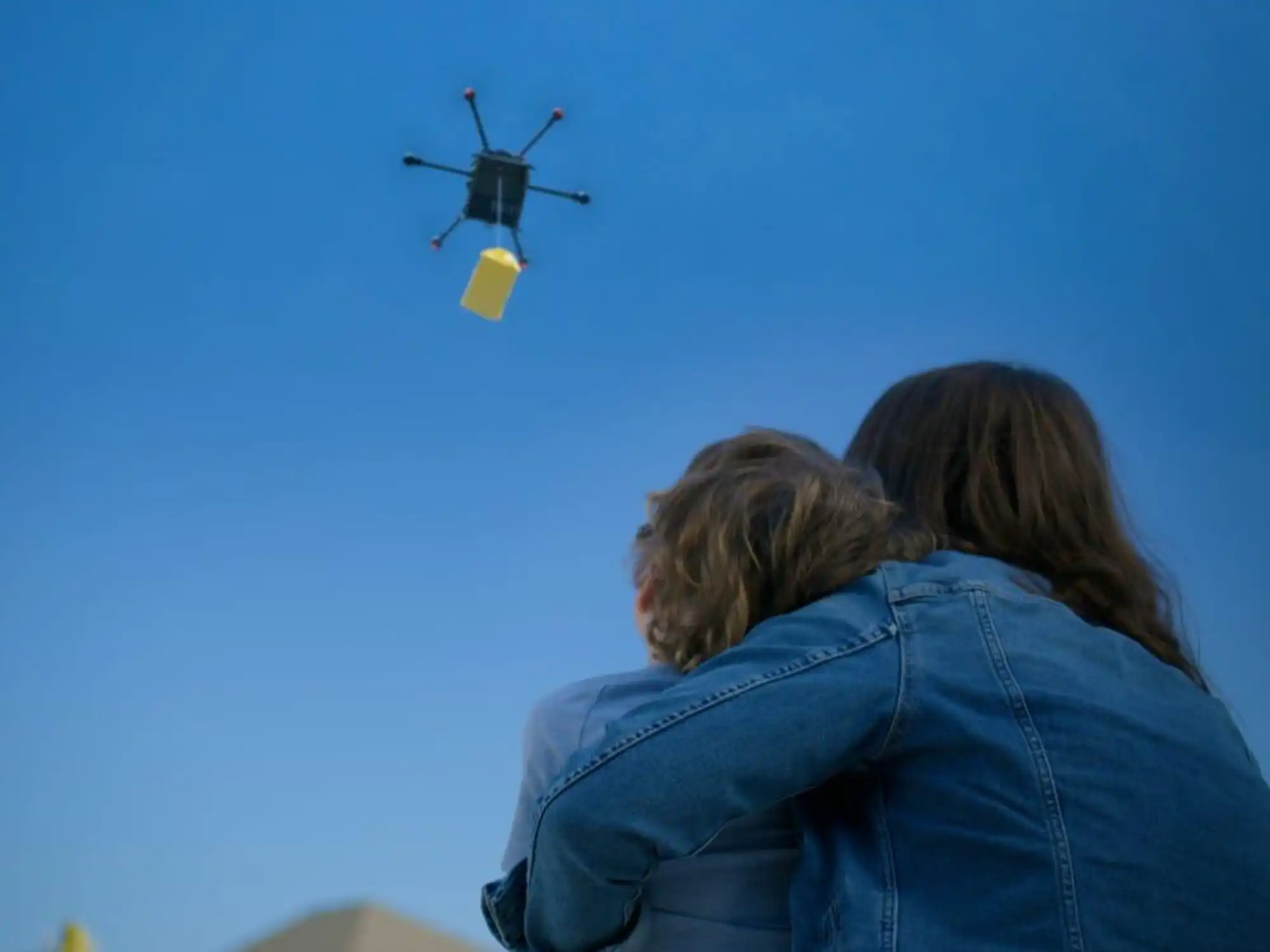
- The privacy vs. convenience trade-off. Early service rollouts prompted plenty of anxious posts on Nextdoor. Residents wondered whether onboard cameras were peeking into backyard pools or if machine-learning models were logging their habits. But everyday utility settled the debate. When fever medication arrives on the lawn ten minutes after you order it, or hot breakfast sandwiches and coffee land just in time for the morning rush, privacy fears quickly give way to sheer convenience. People grew accustomed to the hum above just as easily as they accepted the roar of Saturday morning lawnmowers.
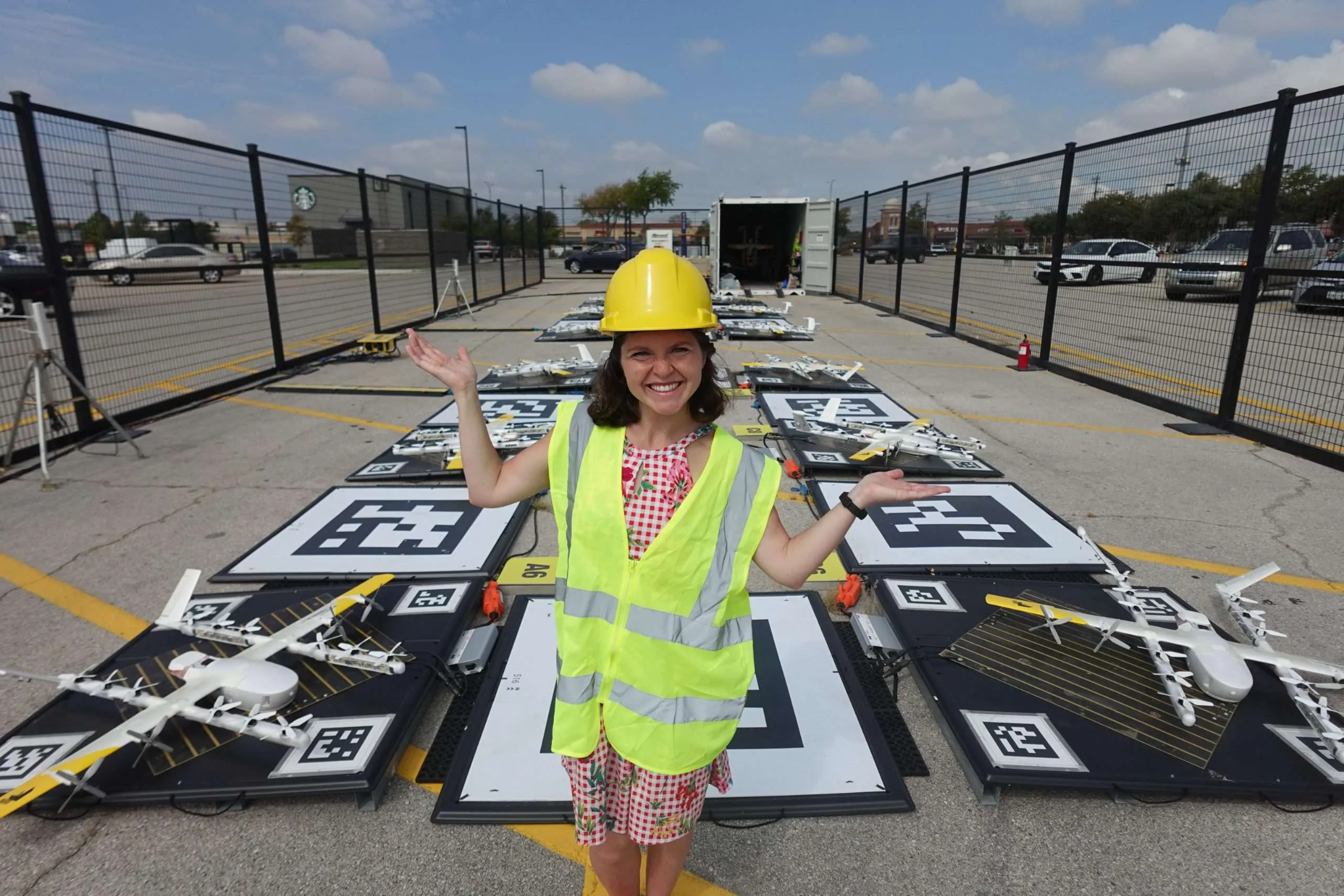
- Rooftop hubs and retail transformation. The launch hubs themselves are a masterclass in pragmatic engineering. Operators didn’t need to purchase sprawling plots of land or build standalone airfields. Instead, Walmart and its partners retrofitted the flat roofs and outer parking spaces of existing Supercenters. The workflow is streamlined: an employee bags the items, steps out to the pad, clips the parcel to the rig, and within seconds the drone ascends autonomously toward a neighborhood block.
The new reality in North Texas shows that technological revolutions don’t become mainstream when trade journals praise them; they take hold when they quietly fade into the background of a family’s morning routine.
Turbulence on the Ground: Wind, Hail, and Fired-Up Dogs
Of course, glossy corporate videos about a spotless aerial future still run up against gritty Texas reality. Commercial drone networks in Dallas are regularly put to the test by regulators, brutal weather fronts, and local wildlife.
- Unforgiving Texas weather. Operations run smoothly until a classic summer thunderstorm rolls over the metroplex. When calm skies suddenly give way to 45 mph wind gusts, driving rain, and golf-ball-sized hail, high-tech aerial delivery is forced to stand down. Flights are grounded, and the heavy lifting temporarily reverts to trusty four-wheel-drive pickups.
- Acoustics and backyard quiet. Multiple high-speed rotors operating at low altitude produce an unmistakable high-pitched buzz. A homeowner trying to read a book on the patio isn’t always thrilled when a delivery craft hovers nearby to drop off a neighbor’s late-night chicken wings. Drone manufacturers are constantly refining blade profiles to dampen the noise and make the frequency less grating.
- The backyard dog factor. Local pets bring an unpredictable element to field trials. Many suburban dogs view a buzzing drone lowering a box straight into their yard as a direct territorial challenge. Operators have had to adjust tether lengths and hover heights to keep deliveries safely out of reach of overzealous golden retrievers.
Yet despite teething issues, sudden hail storms, and territorial four-legged watchdogs, drone logistics in the Dallas suburbs has already crossed the point of no return. It has shown that airborne delivery is neither a sci-fi trope nor a sheltered lab experiment. It is a functional, highly practical infrastructure that is steadily ushering single-story America into a new technological chapter.
Where Does the Industry Fly Next?
Shifting last-mile logistics from sunbaked Texas asphalt into open airspace gives Dallas far more than futuristic bragging rights. It delivers tangible economic and environmental gains, pulling thousands of delivery vans off busy metroplex interchanges where they previously burned fuel in traffic just to deliver a pack of batteries or a fast-food meal. Clean, lightweight electric aircraft are taking on the job without wearing down asphalt or polluting residential air.
While metropolitan areas across the globe are still gingerly testing the waters and sorting through municipal red tape, North Texas has already moved into the next era. Dallas has turned suburbia into a working testbed, showing the world what urban logistics will look like in the years ahead. In the meantime, local residents have stopped looking up in shock, taking it in stride when a hot morning espresso descends smoothly from a blue sky on a high-strength tether.
