

Dallas is gearing up for a future where traffic accidents are a relic of the past and “gridlock” is a term found only in urban planning textbooks. While most global metropolises struggle in vain to pave over traffic collapse with thousands of tons of fresh asphalt, North Texas is quietly rolling out the most ambitious upgrade in the history of urban mobility.
Here, roads are no longer silent strips of concrete under our wheels—they have transformed into a giant digital nervous system capable of sensing every foot of traffic. Welcome to the era of “connected transportation,” where vehicles navigate space with greater precision and confidence than the most seasoned drivers. Discover more about this groundbreaking leap at dallas-name.com.
Digital Road Dialogue: What Is V2I and Why Dallas?
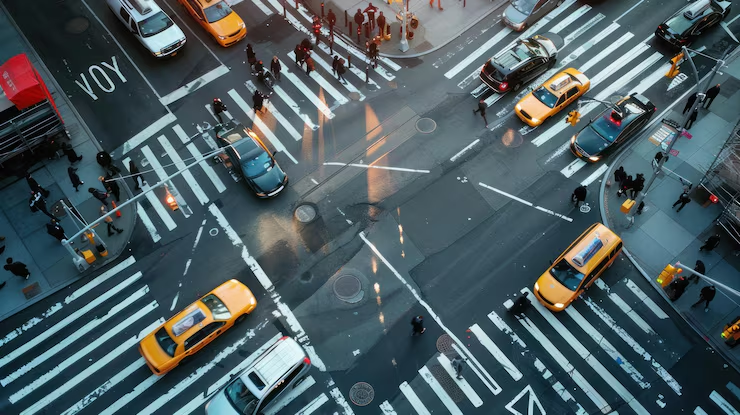
Picture this: you approach an intersection, and a clear prompt flashes across your dashboard: “8 seconds until green light. Adjust speed to 28 mph (45 km/h) to pass without stopping.” Or around a blind bend shrouded in dense fog, a crash has occurred—and your car alerts you to the hazard seconds before you would have hit the brakes yourself.
This isn’t sci-fi cinema or a closed test track in Silicon Valley. It is an everyday reality rapidly taking shape across North Texas roadways. The driving force behind this revolution is V2I (Vehicle-to-Infrastructure) technology.
How Does It Work Under the Hood?
The acronym V2I stands for “Vehicle-to-Infrastructure.” It is a wireless communication system that unites vehicle flow and roadway surfaces into a single living organism where every component is in constant conversation with the rest.
While drivers once relied strictly on their own eyesight and legacy GPS apps, V2I allows vehicles to communicate directly with:
- Smart traffic signals — to coordinate green waves and prioritize emergency vehicles (ambulances, fire engines);
- Road signs and digital message displays — to instantly transmit speed limits and work-zone alerts;
- Traffic flow and pavement sensors — to monitor road congestion and surface grip;
- Weather stations — for early warnings about black ice, hydroplaning, or sudden fog;
- Automated tolling gantries — for seamless, contactless toll highway travel without stopping.
Data exchanges occur in fractions of a millisecond—at highway speeds, every split second is critical. Two primary communication protocols make this possible:
- DSRC (Dedicated Short-Range Communications) — a purpose-built, short-range radio technology similar to ultra-fast, secure Wi-Fi. Operating on the 5.9 GHz band, it delivers instantaneous data transfer even with zero cellular coverage.
- C-V2X (Cellular Vehicle-to-Everything) — a next-generation standard built on 4G/5G cellular networks. It enables vehicles to interact with infrastructure over much greater distances and integrates smoothly with carrier networks.
With these protocols, signal latency drops to just a few milliseconds—dramatically faster than the reflexes of even the most skilled driver.
Why Dallas and North Texas?
Choosing North Texas and the Dallas–Fort Worth metroplex as a leading testbed for V2I rollout was no accident. It is a textbook case of how critical infrastructure strain forces innovators to rethink solutions from the ground up.
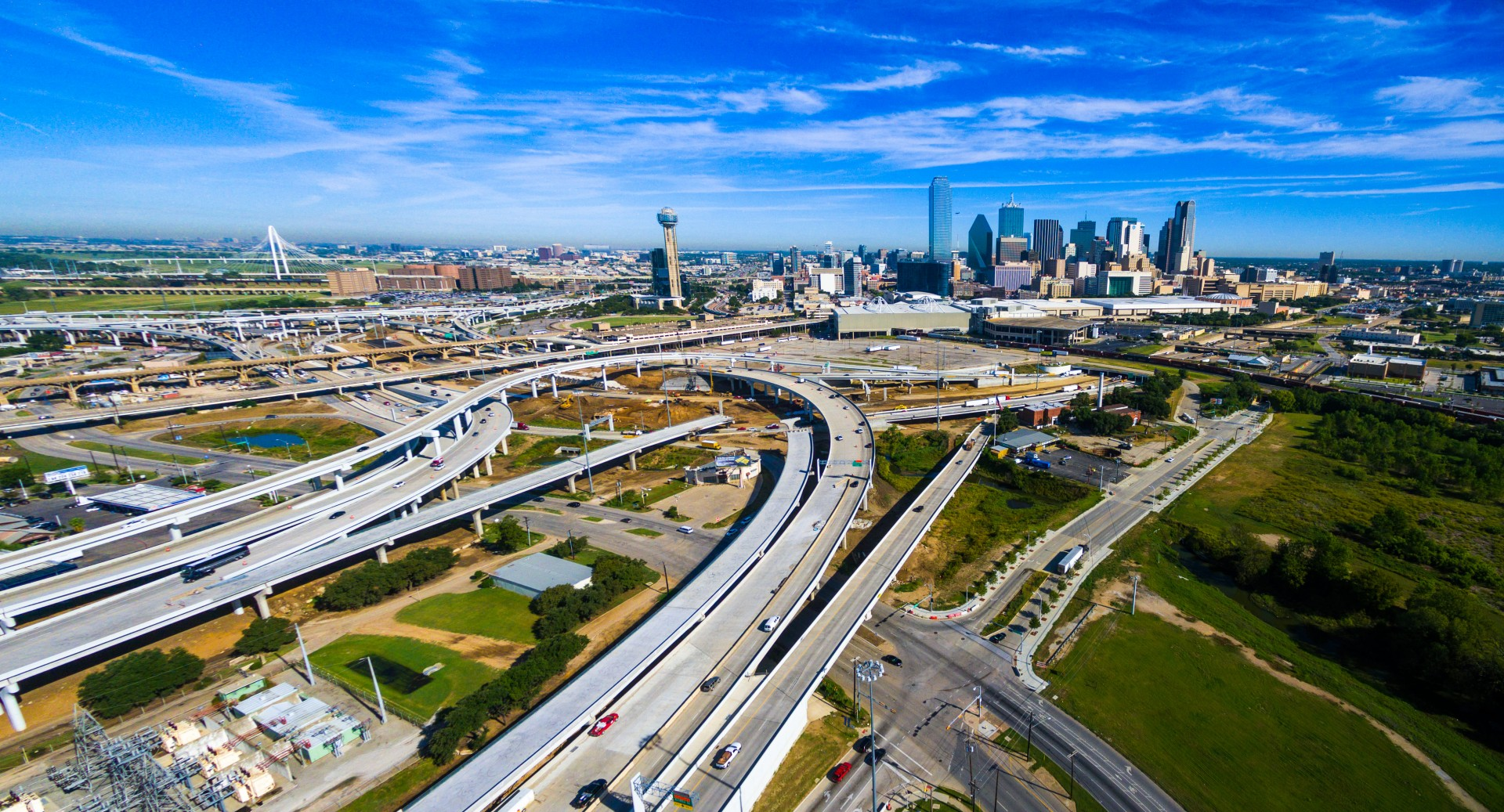
North Texas is undergoing an unprecedented demographic and economic boom. Hundreds of new residents arrive every day, while corporate giants relocate their headquarters to the region. The byproduct is massive congestion across key corridors like the LBJ Freeway (I-635) and the President George Bush Turnpike (PGBT).
The Limits of “Asphalt Expansion”
For decades, urban planners tackled congestion by simply adding more lanes. In Dallas, however, that approach hit a logical dead end for three key reasons:
- Physical constraints. Dense urban development leaves nowhere to squeeze in a 12th or 14th lane.
- Braess’s Paradox. Evidence shows that expanding highways often induces additional traffic demand. Within a few years, newly opened lanes grind to the same halt.
- Financial and environmental toll. Multi-level interchanges cost billions of dollars, take years to build, and trigger endless construction-induced bottlenecks.
Digitizing existing corridors became the only viable alternative. Rather than pouring endless concrete, engineers set out to make existing roadways substantially smarter.
What Does This Mean for Everyday Drivers?
Implementing V2I across Dallas isn’t an abstract lab project; it’s a technology directly reshaping daily commutes.
- A drastic drop in collisions. Most crashes stem from inattention or delayed reaction times. V2I flags hazards—such as a red-light runner speeding toward an intersection—long before the human eye can spot them.
- Time and fuel savings. Smart algorithms adjust traffic signals in real time based on actual road demand. Minimizing stop-and-go driving curbs fuel consumption and lowers carbon emissions.
- Foundation for an autonomous future. Self-driving cars cannot safely navigate complex city grids without persistent communication with the roadway. Dallas is actively preparing its streets for when autonomous driving becomes mainstream.
The digital dialogue between vehicles and highways across Texas proves that the future of mobility won’t be measured in tons of asphalt, but in the speed and fidelity of the information shared between road users.
Smart Traffic Lights and SPaT: How the City Balances Traffic Flow
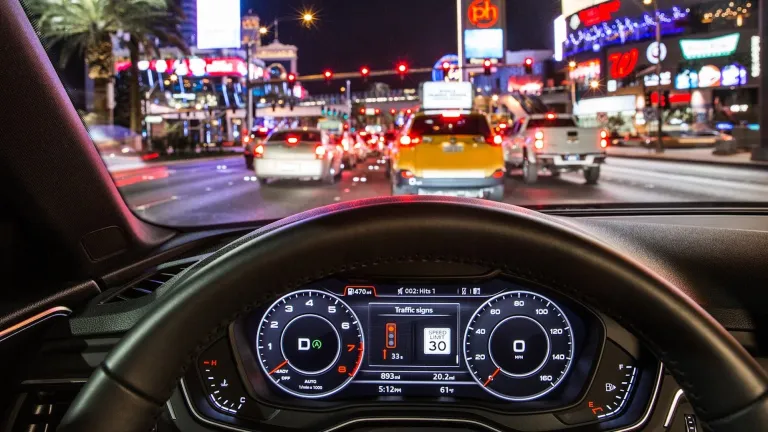
A cornerstone of Dallas’s V2I network is SPaT (Signal Phase and Timing) technology. Intelligent traffic signals continuously broadcast their current status and the precise countdown until the next phase change to connected vehicles.
The system automatically clears green corridors for ambulances, fire trucks, and DART transit buses. When emergency responders approach an intersection, roadside modules detect the signal and either extend the green phase or hasten the red cycle.
Instead of relying on rigid, pre-programmed timers, Dallas traffic lights utilize cameras and induction loops to measure queue lengths. This data dynamically optimizes intersection timing to establish smooth “green waves” along major thoroughfares.
- Speed advisory. Onboard systems display recommended speeds to help drivers glide through consecutive intersections without stopping.
- Reduced emissions. Smoothing out acceleration and braking cycles cuts fuel consumption by 10–15% and noticeably lowers tailpipe emissions.
- Shorter wait times. Adaptive intersection timing slashes average idle delays by 20–25%.
Safety Systems: From Wrong-Way Driving Detection to Work-Zone Warnings
Highway safety is the primary catalyst behind V2I deployment in North Texas. Regional transit authorities are rolling out targeted alert systems designed to warn motorists about immediate road threats.
The North Texas Tollway Authority (NTTA) has outfitted highway ramps with thermal cameras and radar sensors. If a driver mistakenly enters an off-ramp against the flow of traffic, the system activates flashing LED warning signs and instantly pushes a V2I wrong-way driver alert to all connected vehicles within a several-mile radius.
Simultaneously, the TxDOT LoneStar platform feeds critical road notifications directly to dashboard displays—flagging closed lanes, road machinery around blind corners, and winter black ice threats on bridges and flyovers.
- Electronic Emergency Brake Light (EEBL). Alerts drivers when a vehicle ahead slams on its brakes, even if obstructed by traffic or weather.
- Curve Speed Warning (CSW). Warns motorists if they are approaching sharp freeway ramps or cloverleafs at unsafe speeds.
- Work Zone Alerts. Gives advanced warning of construction areas ahead and recommends optimal lane changes well before congestion forms.
Autonomous Logistics Hub: V2I as a Backbone for Driverless Trucks
North Texas is fast becoming America’s primary proving ground for testing and commercializing autonomous freight operations. Supported by favorable state regulations and advanced infrastructure, industry frontrunners such as Kodiak Robotics, Aurora, and Waabi run regular autonomous freight routes along key freight corridors connecting Dallas, Houston, and San Antonio.
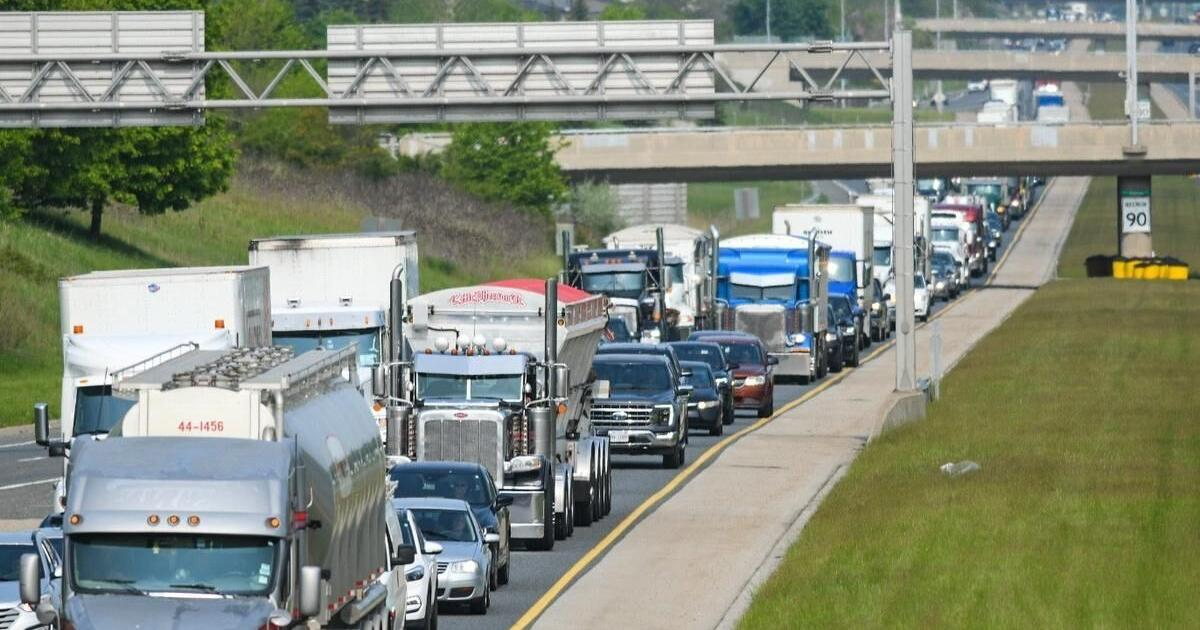
On high-speed interstate corridors, V2I communication serves as an indispensable extra sensory layer for autonomous semi-trucks. It expands upon onboard sensors—lidars, radars, and machine vision cameras—by delivering critical roadway intelligence far beyond the line of sight.
- Weigh station status. Roadway infrastructure broadcasts weigh station wait times and operational schedules, allowing autonomous commercial trucks to complete dynamic weigh-in-motion without stopping.
- Safe interchange merging. V2I transmitters beam live data regarding open merge lanes and blind spots, significantly lowering risk when multi-ton tractor-trailers change lanes on high-speed expressways.
- Predictive braking and route planning. By receiving traffic signal phases in real time, autonomous driving systems calculate smooth approaches well in advance. This eliminates aggressive braking in heavy transport, saves fuel or battery life, and curbs brake wear.
Integrating V2I into Dallas’s logistics corridors turns ordinary expressways into intelligent transit arteries. The synergy of self-driving commercial fleets and smart infrastructure doesn’t just improve interstate safety—it establishes a benchmark for the global future of driverless freight.
5G Infrastructure and Edge Computing: Millisecond Response Times
The dependable performance of V2I systems in Dallas rests upon a robust telecommunications backbone. With telecom giant AT&T headquartered right in downtown Dallas, the city served as the premier rollout site for ultra-low latency 5G networks.
To enable instant data transmission between roadway assets and autonomous vehicles, transportation engineers deployed cutting-edge hardware and architecture:
- Edge computing. Aggregating, processing, and analyzing data from smart cameras, radars, and lidars occurs directly within roadside intersection control cabinets. Shifting computations from remote cloud servers to distributed roadside edge nodes eliminates network transmission lag.
- Under 5-millisecond latency. This lightning-quick turnaround enables onboard computers and safety systems to react to emergencies dozens of times faster than human drivers.
- Cybersecurity and cryptographic encryption. Because roadway infrastructure is critical, all V2I transmissions are protected by auto-verifying digital security certificates. This defends against spoofing, DDoS attacks, and unauthorized tampering with traffic signals and vehicle flow.
Combining roadside edge computing with 5G connectivity turns the streets of Dallas into a high-density digital ecosystem. It guarantees the resilient operation of connected vehicles and sets an unprecedented safety standard for everyone on the road.
