

The DART Silver Line is an ambitious infrastructure project introducing next-generation commuter rail technology to the Dallas–Fort Worth metroplex. Crossing three counties, the line connects the region’s key economic hubs. Unlike traditional DART Light Rail, the Silver Line utilizes diesel-electric multiple units (DMUs), aligning its format more closely with European regional express trains.
From this article dallas-name.com, you will learn:
- how the 42 km chordal route connects key economic centers and DFW Airport, bypassing Downtown congestion;
- why Swiss Stadler FLIRT trains have become the new standard for ecology and comfort in North Texas;
- how seamless logistics are created by integrating rail with bus hubs and the light rail network;
- how the project stimulates the development of “urban villages” and rapid growth in real estate value near stations;
- how the Silver Line Trail solves the “last mile” problem for pedestrians and cyclists.
The New Axis of North Texas
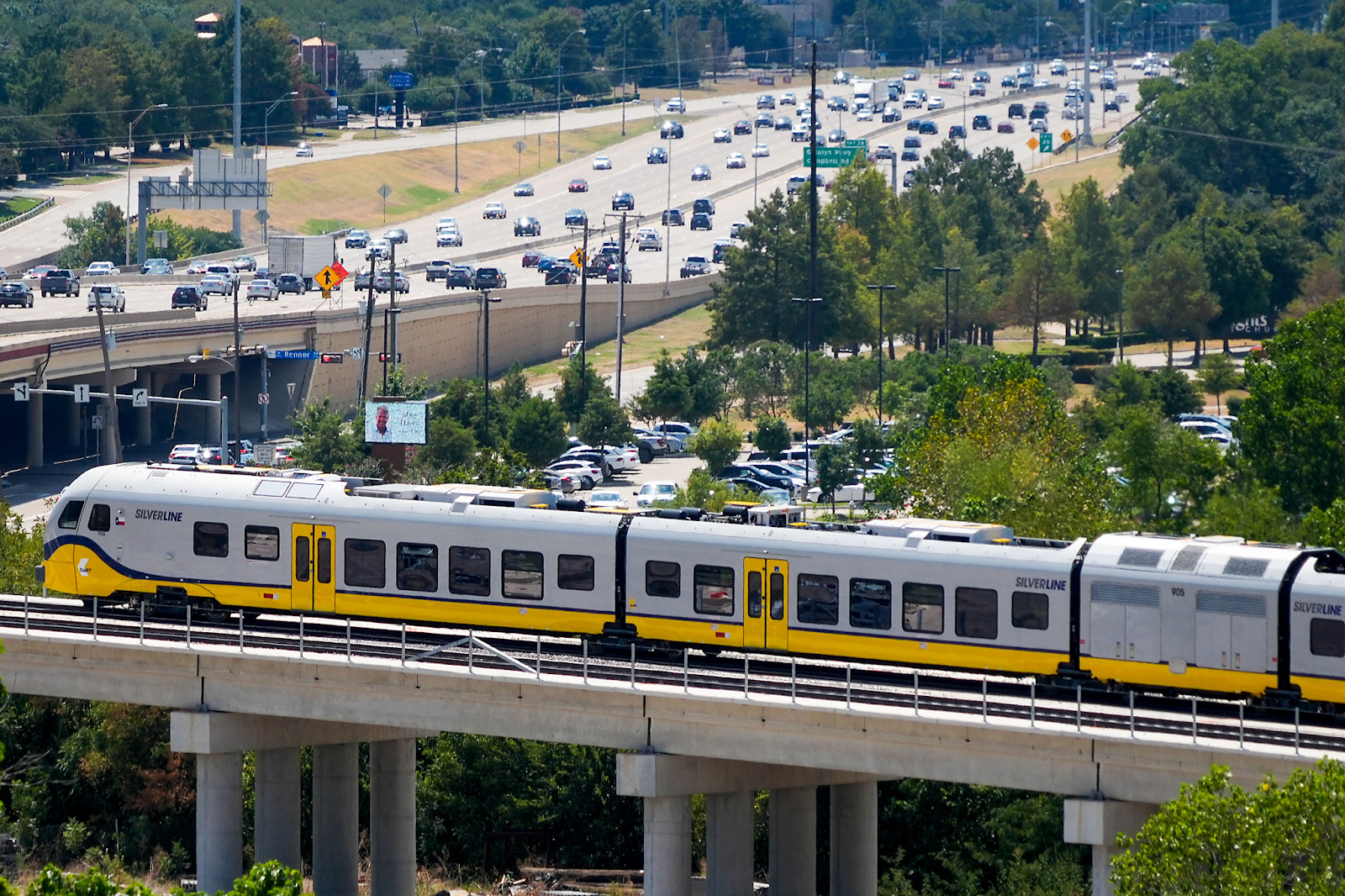
The Silver Line project, implemented by the DART transit agency, is more than just another rail branch—it is a strategic 26-mile transportation corridor that radically shifts the mobility geography of the entire Dallas–Fort Worth region. Unlike traditional radial routes that pull all traffic toward the city center, the Silver Line is built on a chordal principle. It stitches the northern suburbs into a single economic zone, allowing passengers to move swiftly between key points while bypassing the congested highways of Downtown.
The route passes through seven cities, each playing a vital role in this new infrastructural ecosystem.
- Western Segment: Grapevine and Coppell. This section serves as the region’s primary gateway. Grapevine, with its robust tourism and wineries, gains a direct link to the eastern tech hubs. Coppell, as a logistics center, integrates into the passenger network, significantly expanding opportunities for local professionals.
- Central Hubs: Dallas and Farmers Branch. Here, the line crosses the northern residential and business districts of Dallas itself, creating convenient transfer points with existing DART lines (Green and Orange). This provides Farmers Branch residents with rapid airport access without needing a car.
- Eastern Segment: Addison, Richardson, and Plano. This is the true “Silicon Prairie” of Texas. Addison, with its incredible concentration of restaurants and offices, becomes a central stop for business lunches and corporate activity. Richardson (Telecom Corridor) and Plano gain a reliable channel for delivering employees to the offices of tech giants, strengthening their status as the state’s innovation leaders.
The absolute jewel and strategic anchor of the entire route is the terminal station at DFW International Airport Terminal B. Integrating the railway directly into the airport complex transforms the Silver Line into a global transportation tool. Now, a business traveler arriving from London or Tokyo can be on a modern train heading to headquarters in Plano or Richardson within minutes. This makes North Dallas an ideal location for international corporations, blurring the lines between local rail and global airways.
The Technological Heart: European Stadler FLIRT Engineering
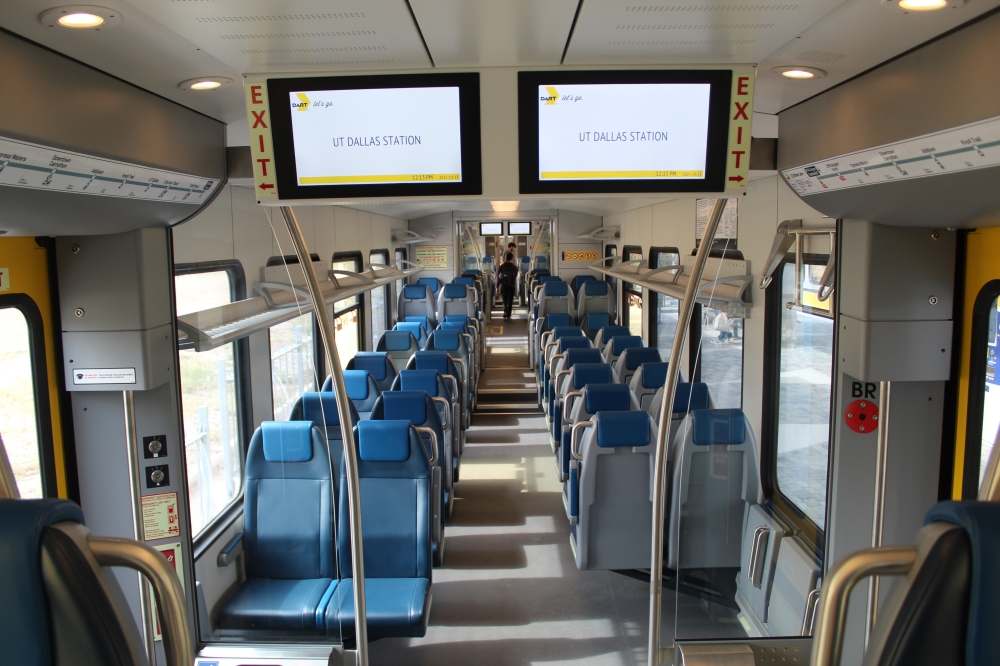
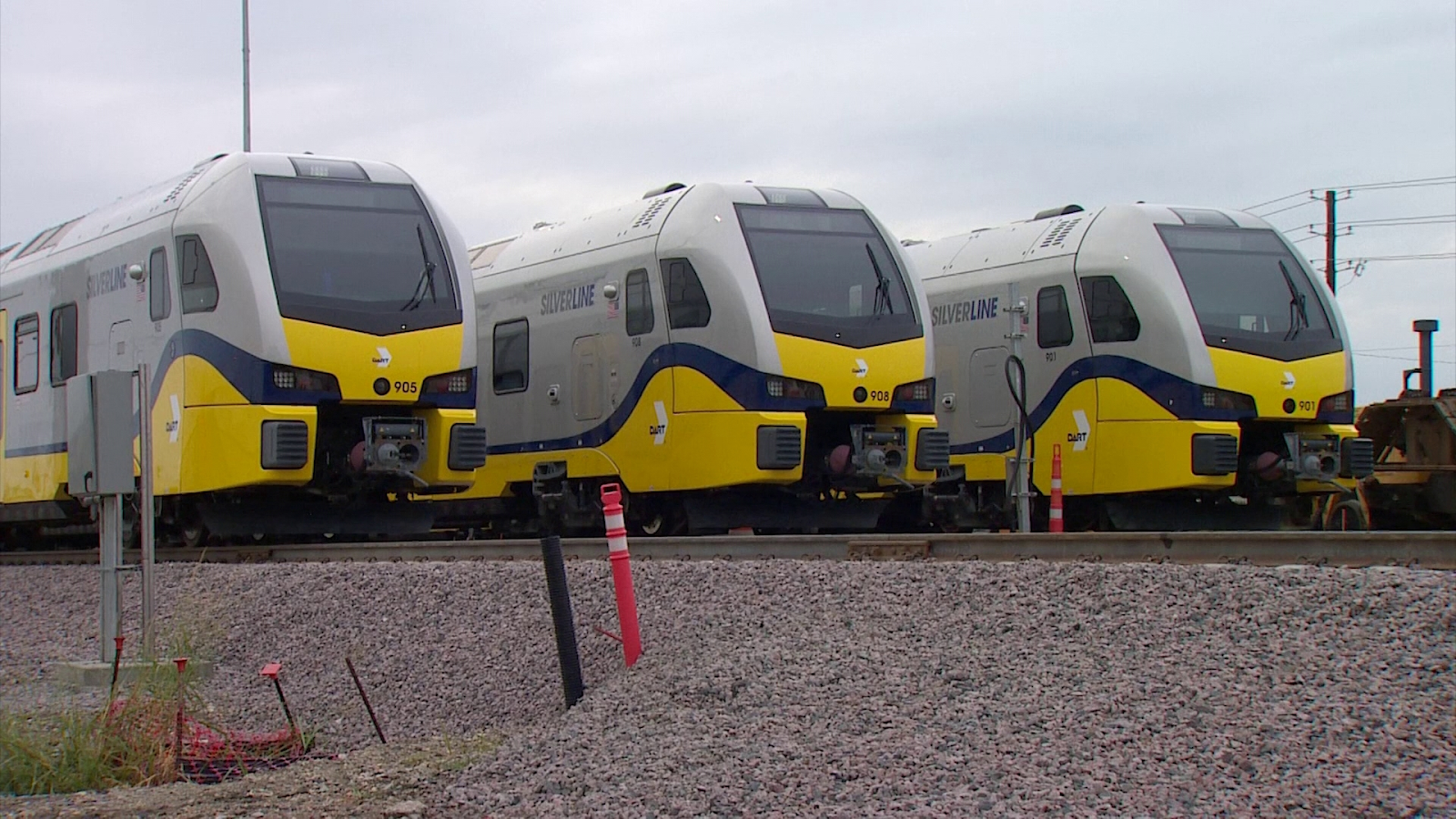
The launch of the Silver Line marks the arrival of a completely new class of railway rolling stock in North Texas. The chosen model is the Stadler FLIRT (Fast Light Intercity and Regional Train), developed by the Swiss concern Stadler Rail. These diesel-electric units (DMUs) have already become the gold standard in Europe due to their modular design and exceptional energy efficiency, and they are now adapted to the specific needs and climate of Dallas.
- Eco-friendliness and Intelligent Drive. Although the trains use diesel, they are worlds apart from legacy locomotives. The engines meet the stringent EPA Tier 4 environmental standards, effectively minimizing nitrogen oxide and particulate emissions. Thanks to the electric transmission, the train moves exceptionally smoothly and quietly, a critical requirement for residents in North Dallas and Plano. Furthermore, the regenerative braking system optimizes fuel consumption during deceleration and acceleration, making the Silver Line one of the “cleanest” commuter lines in the US.
- Accessibility and Future Ergonomics. One of the primary engineering advantages of the Stadler FLIRT is its low-floor design. This ensures quick and comfortable level boarding for passengers in wheelchairs, parents with strollers, and travelers with heavy luggage from DFW Airport. The train interior resembles a modern business-class aircraft cabin: passengers have access to individual power outlets, USB ports for charging devices, and stable free Wi-Fi, turning commute time into a productive work session.
- Capacity and Throughput. Each train consists of four interconnected cars and a central Power Pack module. The total capacity exceeds 230 seats, allowing the system to easily handle peak loads. Spacious aisles and large luggage storage areas make these trains ideal for transit between the airport and the business centers of Addison or Richardson.
The Silver Artery of Prosperity
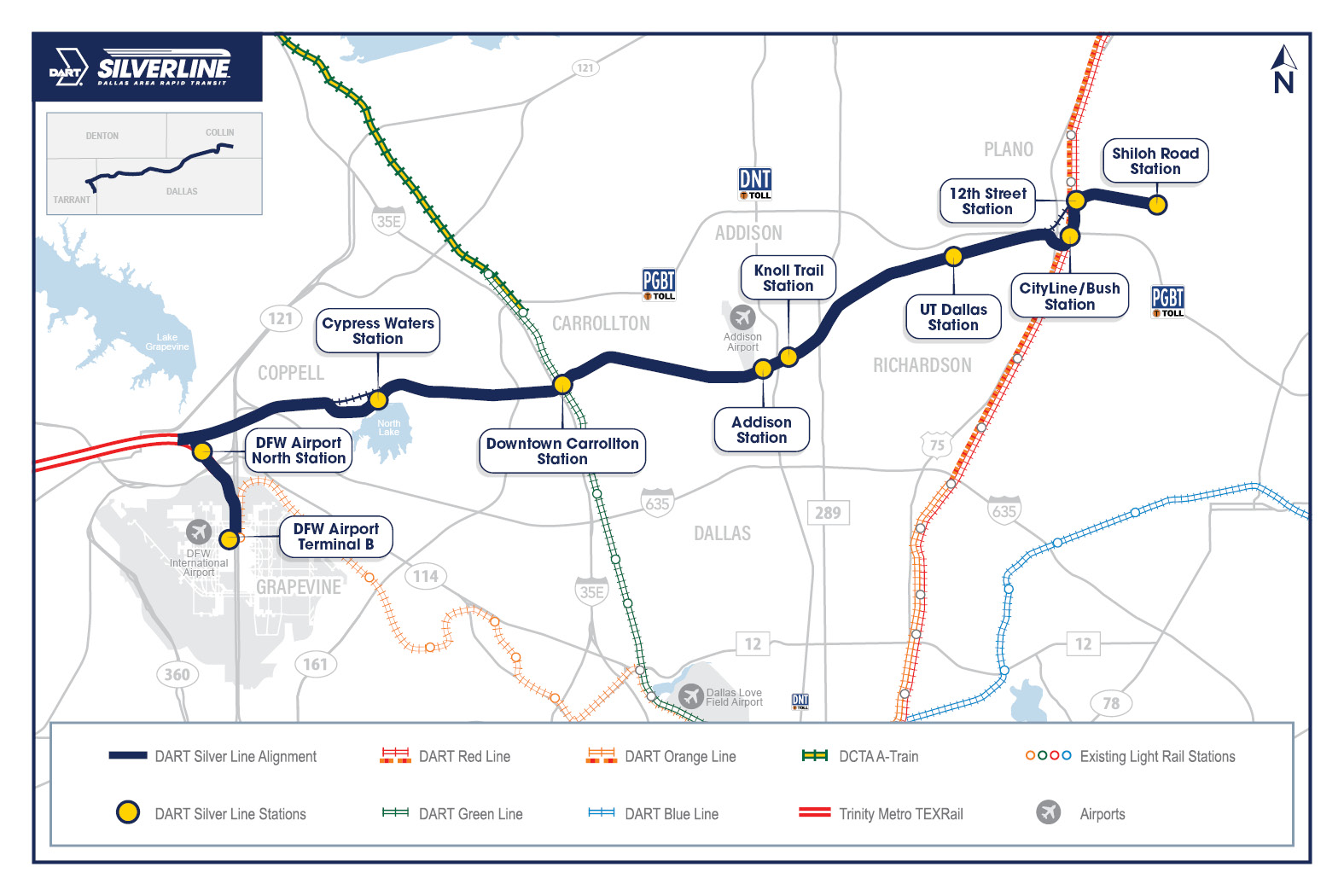
The Silver Line project does more than just add tracks to a map; it creates a holistic multimodal ecosystem where the railway becomes the link between all modes of Texas transport. The line’s strategic importance is highlighted by its deep integration with the existing DART Light Rail network, giving passengers direct access to the Red, Orange, and Green metro lines. A key role is played by the DFW Airport hub, where the Silver Line meets the TEXRail system, forming a continuous transit corridor to the heart of Fort Worth. Each of the ten new stations is designed as a modern hub, merging bus routes and dedicated RideShare zones.
This logistical excellence has catalyzed massive Transit-Oriented Development (TOD), radically changing the face of the Dallas suburbs. Around key stops in Addison and Plano, “urban villages” are already emerging—next-generation high-density neighborhoods. Here, premium offices sit alongside residential apartments and recreation zones, allowing residents to completely bypass daily car use.
The Silver Line Trail
Parallel to the rail tracks, a unique project is being realized—the Silver Line Trail. This is a multi-purpose path for pedestrians and cyclists stretching along the entire route. Creating this “green artery” allows residents to use eco-friendly transport for short distances (solving the “last mile” problem). Cyclists can easily reach the station, leave their bikes in secure lockers, or bring them on board the train.
Safety and Modern Operating Standards
As a next-generation railway, the Silver Line implements advanced safety systems to minimize human error:
- Positive Train Control (PTC): An automated system that prevents collisions, over-speeding, and unauthorized train movements.
- Grade Crossing Modernization: Installation of advanced gates, acoustic signals, and video surveillance at all road intersections.
- Station Design: Platforms are built to ADA standards, ensuring full accessibility for people with limited mobility.
The Silver Line is more than just a railway; it is a steel manifesto of the New Texas, finally breaking the chains of car dependency and stitching together disparate tech hubs into a single intelligent metropolis.
Sources:
- https://www.dart.org/about/plans-projects-and-initiatives/expansion/silver-line-regional-rail-project
- https://dartorgcmsblob.dart.org/prod/docs/default-source/silverline/dart-silverline-guide_oct-2025.pdf?sfvrsn=71dd4dcf_3
- https://communityimpact.com/dallas-fort-worth/lewisville-coppell/transportation/2024/11/21/dallas-area-rapid-transit-to-begin-testing-silver-line-in-coppell/
- https://www.dart.org/about/plans-projects-and-initiatives/expansion/silver-line
