

Dallas has emerged as a global pioneer in the implementation of Digital Twin technology—a virtual 3D replica of the city that synchronizes in real-time with physical objects using thousands of sensors and artificial intelligence. This is far more than a mere visual model; it is a powerful predictive engine that allows municipal agencies to stress-test decisions in a virtual environment before ever breaking ground on the streets of the metropolis.
From the article on dallas-name.com, you will learn:
- about the implementation of Digital Twin technology as a virtual 3D copy of Dallas, synchronized with the real city using AI and IoT sensors;
- about the anatomy of a virtual city, which combines LiDAR laser scanning and geospatial data for high-precision modeling of future objects;
- about the use of environmental intelligence to combat the Texas heat, monitor air quality, and prevent flooding;
- optimizing urban mobility and decarbonization through adaptive traffic management and infrastructure planning for electric vehicles;
- creating a unified energy intelligence for skyscrapers, which reduces the load on the grid and cools buildings efficiently.
The Anatomy of a Virtual City
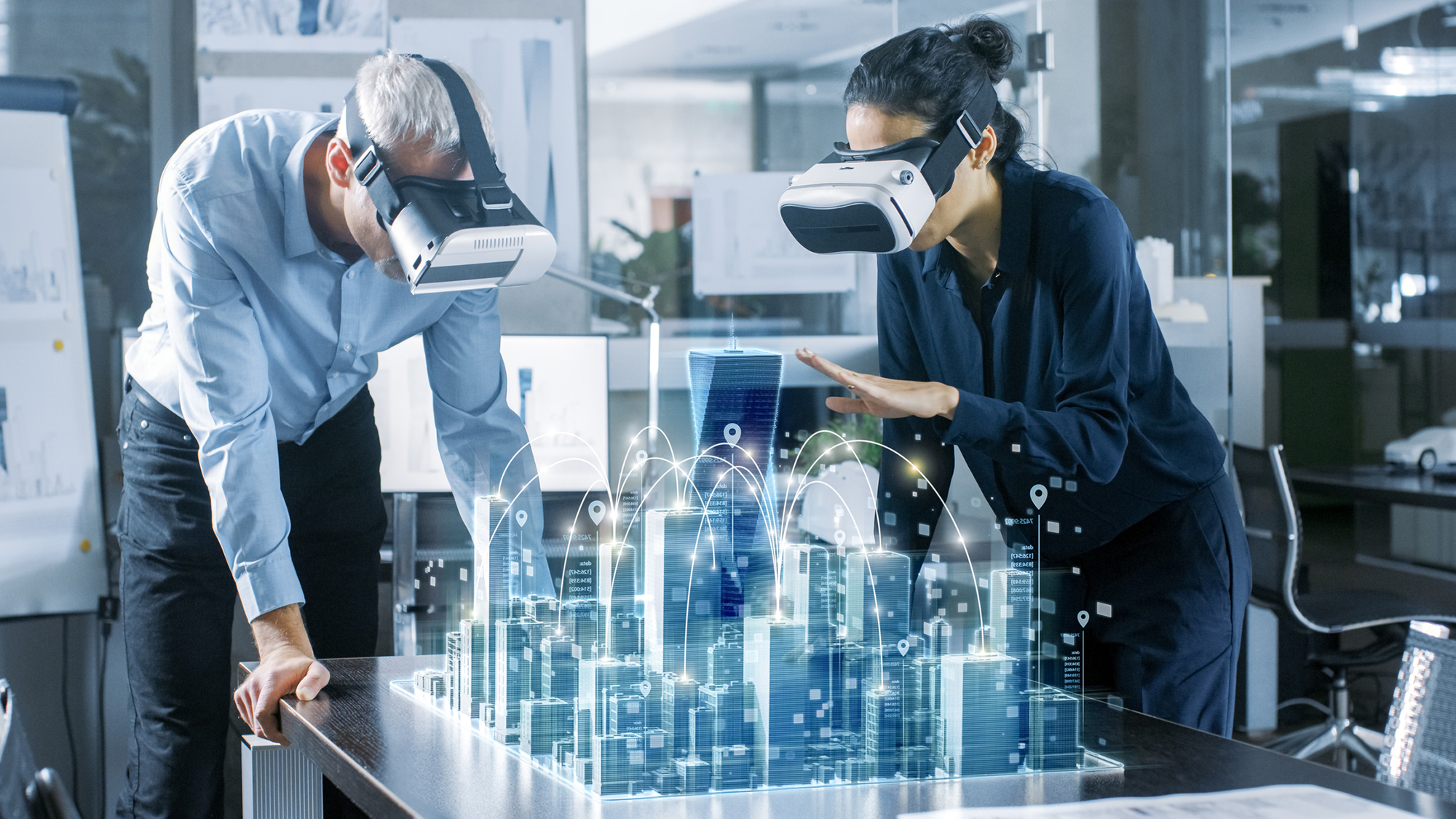
The digital “looking glass” of Dallas is not a static 3D map, but a complex, multi-dimensional replica of the metropolis pulsing in unison with the real city. At the core of this technology lies an unprecedented integration of three fundamental pillars: Geospatial Data (GIS), Building Information Modeling (BIM), and an extensive network of Internet of Things (IoT) sensors. This symbiosis grants city officials and engineers the ability to see through walls, asphalt, and even time itself.
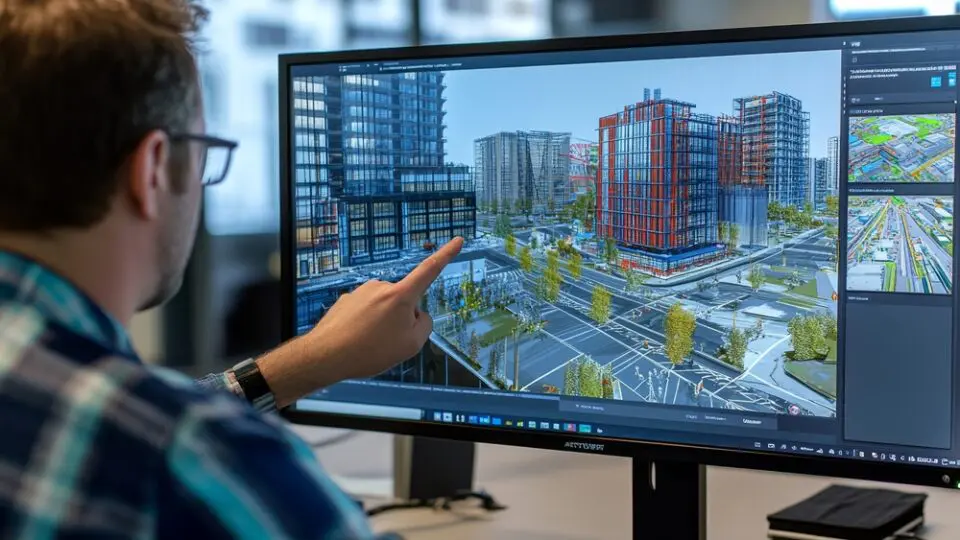
- High-Fidelity Visualization. Through the use of LiDAR (Laser Imaging, Detection, and Ranging) and aerial photogrammetry, the digital model recreates every element of the urban landscape—from the towering spires of Downtown skyscrapers to every individual tree in Klyde Warren Park—with centimeter-level precision. This allows architects to test future projects within a realistic environment long before the first stone is laid.
- Real-Time Data Streams. The virtual city “breathes” thanks to millions of IoT sensors. Artificial Intelligence processes gigabytes of information 24/7 regarding traffic density at Silver Line transit hubs, fluctuations in energy consumption in office towers, water main pressure, and public safety status. Every real-world incident is instantly mirrored in the digital twin, allowing emergency services to respond with unprecedented speed.
- Predictive Modeling. The greatest value of the digital twin is its capacity to act as a “time machine.” By leveraging AI, the city analyzes historical data and current trends to create highly accurate scenarios: how new construction will impact wind patterns, where traffic bottlenecks will form five years from now, or how climate change might alter the water levels of the Trinity River.
This transforms Dallas’s administration into a process governed by mathematical certainty, where every policy decision undergoes a virtual trial before becoming part of the physical infrastructure.
Ecological Intelligence
A primary and critical vector for the digital twin’s application is environmental monitoring. This technology allows the city to combat Texas’s unique climatic challenges with surgical precision.
- Combating “Urban Heat Islands.” Dallas is notorious for its brutal summer heat. AI analyzes the city’s thermal maps to identify zones where concrete surfaces create dangerous overheating. Through modeling, the twin helps calculate exactly where planting trees or creating “green roofs” will yield the maximum temperature reduction for an entire district.
- Water Resource Management. The system predicts flooding risks in the Trinity River basin during severe storms. Artificial Intelligence models water movement through storm drains and suggests optimal upgrades for drainage systems, preventing road erosion and protecting residential areas from water damage.
- Air Quality Monitoring. Integrated sensors within the twin detect pollution sources in real-time. This enables authorities to react swiftly to industrial emissions and optimize traffic flow to reduce smog concentration in high-density residential neighborhoods.
Optimizing Mobility and Decarbonization
In modern Dallas, the transportation system is no longer viewed as a collection of static roads; it functions as a dynamic organism where every second of movement is analyzed through the lens of its carbon footprint. With the Digital Twin, the city has gained a tool for the radical restructuring of logistics aimed at total decarbonization.
A key element of this transformation is the transition to Adaptive Traffic Control. In real-time, AI adjusts the phases of thousands of traffic lights based on a precise virtual model of current street loads. This eliminates the “stop-and-go” effect—where constant braking and acceleration lead to peak CO₂ emissions—and minimizes engine idling in traffic jams.
Urban planning has also migrated to the virtual realm. Before the physical implementation of any new bus line, rail branch, or bike path network, the system runs millions of simulations. The Digital Twin evaluates not only passenger travel speed but also the total ecological impact on each neighborhood. Simultaneously, the city’s digital replica serves as the foundation for mass transportation electrification: algorithms precisely identify optimal locations for EV charging stations by analyzing the movement patterns of thousands of electric vehicle owners.
Skyscraper Energy Efficiency: The City’s “Energy Intellect”
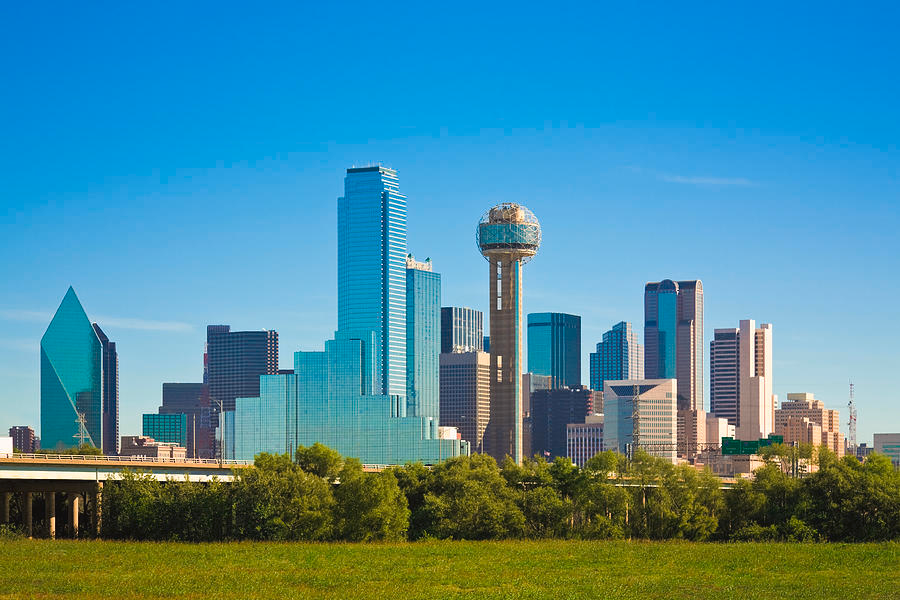
For Dallas, energy efficiency is a matter of infrastructure survival. In a city where glass skyscrapers act as giant solar collectors, air conditioning costs account for up to 60–70% of a building’s total energy consumption during the summer. The Digital Twin acts as the bridge connecting legacy engineering networks to the intelligent management of the future.
Here is how it operates in practice:
- Dynamic Thermal Modeling. The digital twin knows the exact glass and insulation specifications of every tower. AI calculates in real-time how the shadow of one building falls upon another throughout the day. This allows Building Management Systems (BMS) to begin cooling spaces in advance, “pre-cooling” before the solar peak, which is significantly more efficient than trying to lower the temperature of an already overheated office.
- Smart Grid Synchronization. Dallas’s main challenge is peak demand during the day when millions of AC units turn on simultaneously, risking blackouts. The digital twin allows entire blocks to “communicate.” If one group of buildings is currently in the shade, it can temporarily increase consumption while others decrease power. This balancing act reduces pressure on the municipal grid by 15–20% without sacrificing occupant comfort.
- Weather-Driven Forecasting. Integration with meteorological services allows algorithms to analyze not just temperature, but also humidity levels and wind speed. If the twin predicts a sharp weather shift in two hours, it automatically adjusts the operation modes of chillers and pumps across hundreds of buildings simultaneously.
By creating this “unified energy intellect,” Dallas proves that even in the heart of the sweltering Texas plains, it is possible to maintain cooling without exhausting the planet’s resources.
Planning the Future Without Error
The core value of the Digital Twin is the ability to avoid multi-million dollar mistakes in construction. Every new project, whether a deck park over a highway or a new residential complex, is first “built” in the digital replica. Experts assess how the new structure will affect air circulation, neighboring shade, and the load on existing ecological resources. This ensures harmonious urban development where every new element works to improve the ecosystem rather than diminish it.
Furthermore, through AI simulations, the city prepares for extreme weather events—ranging from tornadoes to atypical Texas winter storms. The digital twin allows for the calculation of grid loads and the early identification of infrastructural weak points, which is mission-critical for maintaining the city’s vitality in the face of global climate change. Dallas today is not just concrete and glass; it is a sophisticated digital algorithm working for every citizen.
Sources:
- https://dallasinnovates.com/uta-researcher-builds-ai-tool-to-help-emergency-managers-plan-smarter-evacuations-in-real-time/
- https://innovateenergynow.com/resources/how-digital-twins-and-ai-are-powering-the-next-industrial-leap
- https://www.aitimejournal.com/how-ai-is-changing-digital-twin-in/46307/
- https://www.eng.cam.ac.uk/news/digital-twins-next-phase-ai-revolution
