Dallas is one of the most well-known cities in the United States — a vibrant urban hub full of architectural landmarks, natural sites, parks, squares, and museums. Every year, thousands of tourists visit Dallas to explore something new and experience the city’s unique atmosphere. Among its most popular attractions is the Perot Museum of Nature and Science, which opened its doors in 2012. Today, we’ll take a closer look at the museum’s history and development. Read more on dallas-name.com.
How It All Began
The story of the museum dates back to 1936, when the Dallas Museum of Natural History was established as part of the Texas Centennial Exposition. A decade later, in 1946, the Dallas Health Museum was founded — later evolving into the Science Place. In 1995, the Dallas Children’s Museum was created.
By 2006, a decision was made to merge these three institutions — the Dallas Museum of Natural History, the Science Place, and the Dallas Children’s Museum — into one unified organization. This merger laid the foundation for what would become the Perot Museum of Nature and Science.
A key role in the creation of the museum was played by the Perot family. The family’s five children donated $50 million, which greatly accelerated construction in the Victory Park district. In total, $185 million was raised to fund construction, develop exhibits, and launch educational programs.
The museum’s striking modern building, designed by Pritzker Prize-winning architect Thom Mayne, opened in 2012. It spans over 180,000 square feet and features five floors of interactive exhibit halls dedicated to paleontology, geology, ecology, astronomy, and more.
Why the Museum Is So Fascinating
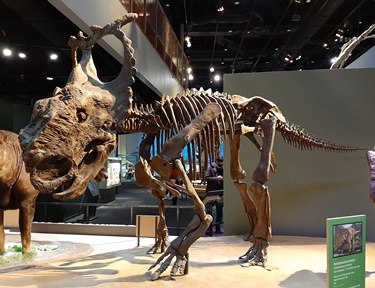
The Perot Museum of Nature and Science captivates visitors of all ages. It includes five main galleries — geology, paleontology, biology, physics and engineering, and the human body. One of the biggest highlights is the dinosaur exhibit, featuring over 80 fossils, including complete skeletons of a Tyrannosaurus rex and a Triceratops. Each year, the museum welcomes over one million visitors.
Beyond its exhibits, the museum plays a major role in science education, particularly in the fields of ecology and Earth sciences. It regularly hosts lectures, scientific events, and hands-on workshops. The Perot Museum helps spark curiosity and promote an appreciation for science and technology — a vital mission for a major industrial city like Dallas, where environmental awareness is increasingly important.
Visitors especially enjoy the earthquake simulator, real-time research labs, and interactive science demonstrations. Accessibility for visitors with disabilities is also one of the museum’s top priorities.
Between 2012 and 2025, the Perot Museum underwent several modernization phases — updating exhibits, enhancing its technological base, and expanding educational programs. These improvements were made to make science more accessible to the general public — and most importantly, to inspire children’s interest in discovery.
The Perot Museum of Nature and Science continues to embrace cutting-edge digital and interactive technologies. For instance, it now integrates virtual reality (VR) and augmented reality (AR) experiences, allowing visitors to step into prehistoric eras or explore natural phenomena in immersive 3D environments. Touchscreens and interactive displays let guests examine 3D models of artifacts, uncover detailed scientific data, and even conduct virtual experiments.
The Perot Museum stands today as one of Dallas’s leading scientific and educational centers, combining innovation, education, and inspiration under one roof.
We hope this article helped you learn more about one of Dallas’s greatest landmarks — and perhaps inspired you to plan your own visit to the Perot Museum of Nature and Science!